
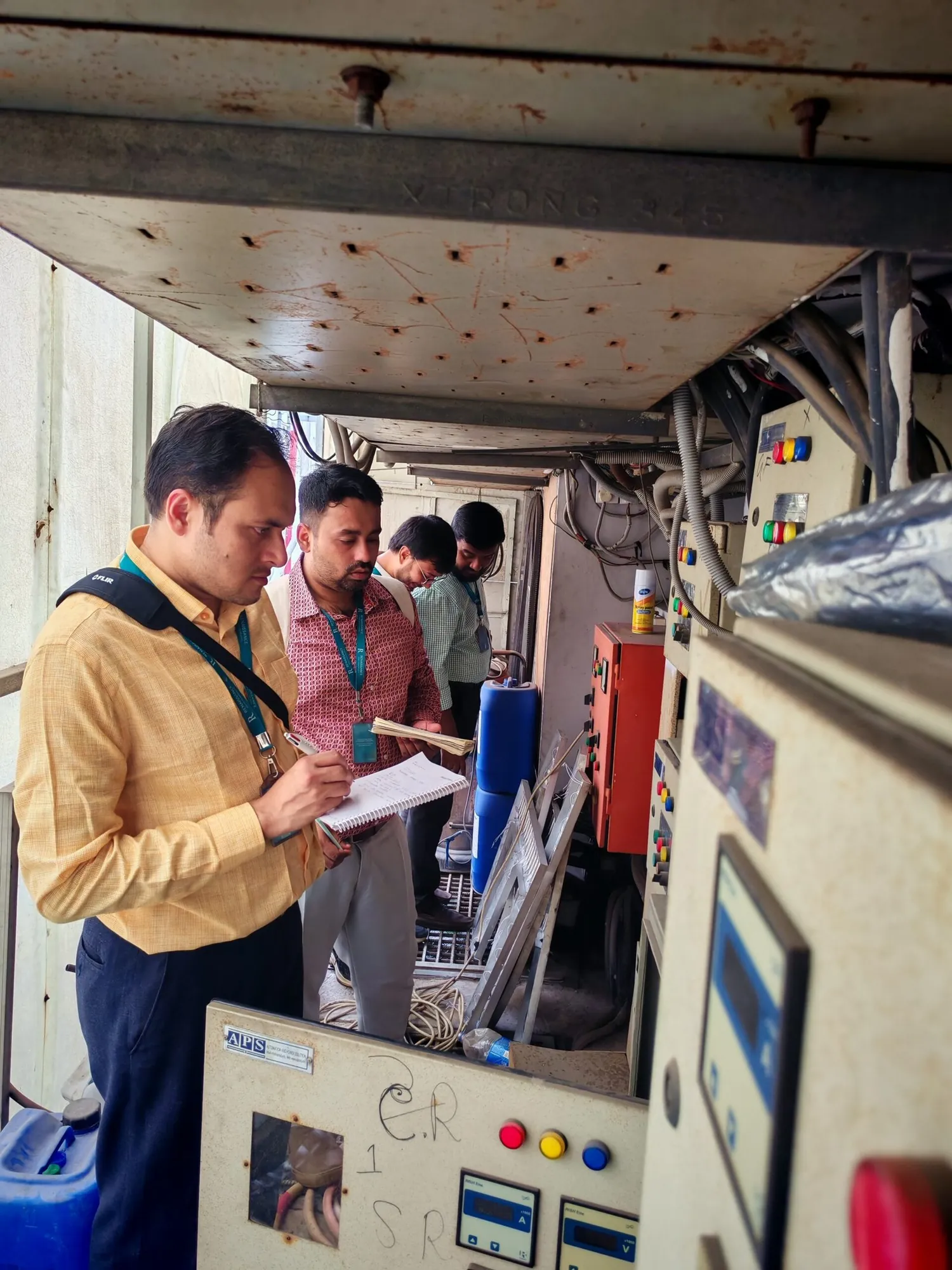
A factory in Gazipur hires a consultant to help prepare its greenhouse gas (GHG) inventory and science-based targets. The consultant requests electricity bills, gas consumption, diesel records, production volumes, and purchased-material data. The information exists—but accounts has the bills, maintenance has generator logs, procurement has supplier invoices, and production has monthly output records. Some files are on individual computers, others are in email threads, and several months are missing.
The consultant spends days chasing documents before the emissions calculations can begin.
This problem is common and avoidable. For Bangladeshi factories preparing for the Science Based Targets initiative (SBTi), the most useful improvement may be a simple data management system that is updated monthly rather than built from scratch at year-end.
This guide explains the documents to prepare, who should maintain them, how to track data, and what a clean handover pack should contain.
What does SBTi need—and what are supporting records for?
SBTi target validation is not simply a matter of uploading every invoice a factory has. The company must develop an inventory and targets that meet the requirements of the applicable standard and validation route. The inventory should be traceable to source data, calculation methods, emission factors, and assumptions. The precise submission evidence depends on the version, route, sector, and circumstances of the company.
Keep two levels of records:
Source records: Original utility bills, meter readings, fuel invoices, production data, purchase records, supplier information, and other relevant evidence.
Reporting records: The activity-data tracker, GHG calculation workbook, emission-factor register, assumptions log, exclusions register, inventory, and target-setting calculations.
The reporting figures should be traceable back to their sources. This is consistent with the GHG Protocol Corporate Standard and the Corporate Value Chain (Scope 3) Standard, which provide the accounting framework for corporate and value chain emissions.
1. Company and facility information
Start by preparing a company profile and a clear organizational boundary. Include the legal company name, business activities, facilities, offices, warehouses, and relevant subsidiaries or group entities. Provide site addresses and identify which operations belong in the reporting boundary.
For multi-site companies, assign each facility a short, unique code. For example, a garment group might use `GAZ-01` for a sewing facility and `NAR-01` for a dyeing facility. Use the same codes in invoices, activity data, and calculation files so that records from separate locations do not become mixed.
Keep a site list and a note explaining the consolidation approach used. If the group acquires a factory, outsources a process, or changes the reporting boundary, document the change and assess whether the inventory or target needs to be recalculated under the applicable rules.
2. Scope 1: Fuel and direct-emissions records
Scope 1 data can include gas burned in boilers, fuel consumed by captive generators, company vehicle fuel, and relevant refrigerant leakage. Depending on the facility, records may include:
Monthly natural gas bills and meter readings.
Diesel and other fuel invoices, stock registers, and fuel issue records.
Generator operating logs and electricity generation records, if available.
Company fleet fuel records.
Refrigerant purchase, recharge, and maintenance records.
Records for other relevant direct-emission sources.
Do not assume that fuel purchased during the year equals fuel consumed during the year. Where fuel is stored, reconcile purchases with opening stock, closing stock, and internal issue records when applicable. Generator operating hours can help explain consumption, but they are not automatically a substitute for fuel data.
3. Scope 2: Purchased electricity and energy
Maintain monthly electricity bills for each included facility and meter. Record consumption in kWh, the reporting month, the meter or account number, and the facility code. Keep meter readings or submeter data where available.
If the factory has rooftop solar, captive generation, or qualifying renewable electricity procurement, maintain the relevant generation, consumption, contract, and certificate records. Such evidence supports appropriate accounting and renewable-electricity claims, but it does not by itself replace the full emissions inventory.
The reporting file should identify the Scope 2 accounting approach and emission factor used. Do not collect only the amount paid in taka: physical consumption and the relevant calculation method are necessary for an emissions estimate.
4. Scope 3: Procurement and value-chain records
Scope 3 data often needs the most coordination. Relevant categories vary by factory, but may include purchased raw materials, packaging, outsourced processing, inbound and outbound transportation, waste treatment, business travel, and other value chain activities.
For purchased materials, maintain a monthly or annual purchase register with supplier name, material type, quantity, unit, reporting period, and available product or environmental information. Where practical, record kilograms or tonnes instead of only purchase value. Financial data may be used for some estimation methods, but it is not equally suitable for every category.
For transport, retain shipment or logistics information that helps quantify the relevant activity. For waste, keep waste type, quantity, and treatment or disposal records. Ask major suppliers for activity or emissions data where available, and document estimation methods when primary data is unavailable.
The GHG Protocol Scope 3 Standard can help the company identify relevant categories and accounting practices.
5. Production and operational records
The inventory becomes more useful when it can be interpreted alongside production. Keep monthly output by product type, unit, operating days, major shutdowns, and equipment operating hours where relevant. Significant capacity or process changes should also be recorded.
For example, an increase in electricity consumption may result from higher output rather than poorer efficiency. Production data helps explain the change. It can also support intensity indicators such as kWh per tonne of product, where suitable.
Production metrics do not replace emissions accounting. They provide context for performance analysis and reduction planning.
6. Keep the GHG calculation evidence
The GHG calculation workbook should identify the reporting year, organizational boundary, activity data, units, conversion steps, emission factors, data sources, assumptions, exclusions, and calculated emissions in tonnes of carbon dioxide equivalent (tCO₂e). Keep the factor source and year with the value rather than storing unexplained factors in formulas.
Use a separate emission-factor register where practical. If an input is estimated, clearly label it as an estimate and record the method and limitation. If a number changes after review, preserve an audit trail that records what changed, why, and who approved it. Never overwrite original source records without retaining the earlier version.
Where an energy audit or decarbonization study has been prepared, retain the report and supporting measurements. These documents may help identify reduction opportunities, but they do not substitute for the underlying activity data and GHG calculations.
7. Assign ownership by department
The simplest system is to ask each department to maintain the data it already produces.
Accounts and finance: Utility bills, fuel invoices, purchase expenditure, and relevant financial records.
Maintenance and utilities: Meter readings, generator logs, boiler data, fuel issue records, equipment information, and refrigerant maintenance.
Production: Monthly output, operating days, and relevant machine-hour information.
Procurement and supply chain: Material quantities, supplier information, outsourced processing, and transport records.
HR and administration: Relevant employee commuting, business travel, and other administrative data where included.
EHS or sustainability: Waste records, environmental records, inventory coordination, and data quality follow-up.
Management: Approval, resources, and accountability for the reporting process.
Appoint one coordinator—such as an EHS manager, compliance officer, energy manager, or nominated staff member—to manage the tracker and follow up on missing information.
8. Use one master tracker and a clear folder structure
A spreadsheet can be enough for an initial system. Useful columns include reporting month, facility code, scope, activity, value, unit, source-file name, responsible department, submission date, review status, and remarks.
Use straightforward statuses such as Pending, Received, Under Review, and Approved. Every important value should be linked to a supporting document or a documented estimation method.
A shared folder could be organized as follows:
`01_Company_Boundary`
`02_Scope_1`
`03_Scope_2`
`04_Scope_3`
`05_Production_Data`
`06_Emission_Factors`
`07_GHG_Calculation_Workbook`
`08_Energy_Audit_and_Reduction_Plan`
`09_Assumptions_and_Data_Gaps`
`10_Final_Report_and_Submission`
Use one file-naming format, such as `2026-01_Scope2_Electricity_GAZ-01.pdf`. Avoid vague names like `new-bill-final2.pdf`. Preserve original bills as read-only files where possible and save working spreadsheets separately. Limit access to sensitive supplier and commercial data.
9. Follow a monthly routine
At month-end, accounts uploads utility bills; maintenance records meter readings and fuel use; production submits output; and procurement updates material quantities. During the first week of the next month, the coordinator updates the tracker. During the second week, the team checks missing periods, duplicate entries, inconsistent units, and differences between the source documents and spreadsheet.
At quarter-end, management reviews major changes and open data gaps. At year-end, the coordinator confirms completeness and produces the handover pack. The exact dates can be adjusted to the factory’s schedule; consistency matters more than the chosen date.
A missing January gas bill should be flagged in February, not discovered when the annual inventory is nearly complete.
10. What to hand over to the auditor or consultant
A clean handover pack should include:
1. Company and facility boundary information.
2. Complete activity data for the reporting period.
3. Original source documents and a clear file index.
4. The master tracker with data owners and review status.
5. The calculation workbook, emission-factor register, methods, and assumptions.
6. A list of exclusions, estimates, and unresolved data gaps.
7. Production data and relevant energy-audit findings.
8. Available reduction projects, targets, and implementation records.
Before handover, confirm that every month is accounted for, units are clear, duplicate rows are removed, and major figures reconcile with source records. Explain any unavailable data instead of silently filling gaps with unsupported values.
Prepare once, maintain monthly, hand over confidently
The goal is not to make a factory’s reporting system complicated. It is to turn information that already exists across accounts, maintenance, production, procurement, and administration into a traceable and consistent record.
Hexa Engineering Limited offers carbon accounting and sustainability services and SBTi consultancy, including emissions inventory development, data collection, target-boundary assessment, and submission support. For energy-related records and reduction opportunities, the factory can also review Energy Audit and Efficiency Consulting.
To discuss a facility’s reporting needs, visit Hexa-BD’s contact page. A reliable data pack will not remove every technical question, but it will make analysis faster, improve traceability, and give the company a stronger basis for credible climate targets.